

Brief History

When the conversation turns to the titans of high-fidelity analog audio, few names command as much respect—or evoke as much nostalgia—as Dual. Founded by the Steidinger brothers in the Black Forest of Germany in 1906, Dual’s influence on turntable design and manufacturing has reverberated through every era of home listening, from the earliest shellac discs to the vinyl renaissance of today.


A Timeline of key milestones

Pioneers of Turntable Technology
In the post-war decades, Dual distinguished itself as Europe’s largest turntable manufacturer, employing thousands and setting the gold standard for reliability, ease of use, and sonic quality. Their innovative approach began with the dual-mode power supplies and quickly advanced into fully integrated Hi-Fi solutions—culminating in the first 78 rpm changer, the Model 1000, and pioneering lightweight phono cartridges for gentler, more precise record playback.
Setting the Stage for High-Fidelity Listening
As the world shifted toward stereophonic sound, Dual responded with remarkable technical achievements. The brand’s automatic mechanisms, modular design philosophy, and anti-resonance engineering were showcased in models such as the 701—the first direct-drive turntable made in Europe. This model introduced groundbreaking solutions for resonance damping, using a flexible, spring-based sub-chassis and an anti-resonator in the tonearm counterweight—features designed to neutralize both mechanical and airborne vibrations before they could degrade musical integrity.
Elevating Everyday Listening
Dual’s impact stems not just from breakthrough flagships but also from their democratization of quality audio. The company consistently supplied a wide range of reliable, high-performing, and affordable decks—from fully automatic to belt- and direct-drive models—making superior analog playback accessible for music lovers at every budget. Their robust, easy-to-set-up designs appeared in countless living rooms and audio racks across Europe, North America, and beyond, turning casual listeners into lifelong vinyl devotees.
Forward-Thinking in Design and Manufacturing
By continually refining mechanisms for automation, vibration control, and tonearm geometry, Dual contributed lasting technical solutions still evident in today’s turntable engineering. The modular ethos they espoused—preserving essential components like tonearms and platters for critical quality, while streamlining less consequential parts—remains a guiding principle for affordable and audiophile turntables alike.
A Living Legacy in Modern Analog
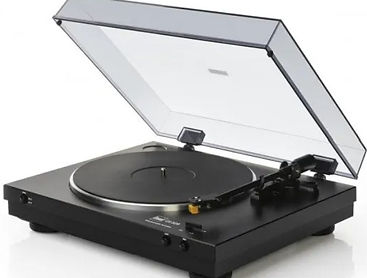
After navigating changes in ownership and the challenges of globalized production, Dual’s spirit endures. Modern Dual turntables—ranging from high-end flagships to innovative wireless-operated models like the CS 529BT—honor both heritage and innovation. They pay homage to classic engineering while ensuring contemporary listeners can access analog playback with convenience and fidelity, even integrating technologies like remote app control and factory-set geometry for effortless setup.

Cultural Impact
-
European Household Staple – Throughout the 1970s and 1980s, Dual decks were as common in German, Dutch, and French homes as any television set. Their ubiquity helped nurture a generation of vinyl enthusiasts who later gravitated toward higher‑end models.
-
DJ Foundations – Early hip‑hop and electro DJs in Europe often started on Dual 1219 units because they were cheap, reliable, and easy to modify (e.g., adding slip‑mats). Though not as torque‑heavy as Technics, they proved that a good belt‑drive could hold up under rhythmic scratching.
-
Educational Platform – Many audio‑engineering schools used Dual turntables for lab exercises, thanks to their transparent construction and straightforward schematics. This exposure seeded a deeper appreciation for analog mechanics among future designers.
Analog Soundware thoughts
Dual may not command the same headline‑grabbing fame as Technics or Linn, but its contribution to the hi‑fi turntable world is undeniable. By championing affordability, durability, and user‑friendly mechanics, Dual turned vinyl playback from a niche hobby into a mainstream pastime across Europe. Its classic 1219 series stands as a testament to the power of good enough—a design that does exactly what it needs to do, without unnecessary fuss, and leaves room for the listener to add personal flair.
So the next time you hear the soft whir of a belt‑driven platter, consider the quiet legacy humming beneath it. In the grand symphony of turntable history, Dual provides the steady bass line that keeps everything grounded, allowing the higher notes—innovation, artistry, and pure musical joy—to soar.