
Denon PT-11
Denon
Japan
Tape Deck Details
Number of Motors
1
Number of Heads
2
Head Configuration
Full-Track-Mono
Wow & Flutter
0.5%
Signal-to-Noise [dB]
45
Dimensions [mm]
400 × 250 × 150
Weight [kg]
6
Year built
Head Composition
Equalization
NAB
Frequency Response
80–10,000 Hz
Speed
7, 18.3
Max Reel [inch]
7
Tracks
1/2Rec/PB
Price
User
Consumer
Additional Information
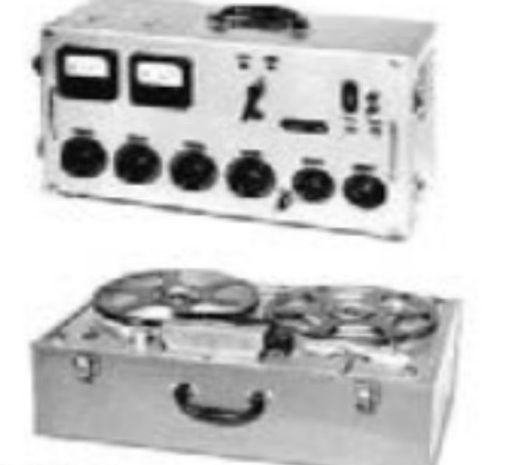
The Denon PT-11 (also referred to as PT11 in archival sources) is an early 1950s professional/business-use reel-to-reel tape recorder, introduced by Denon (then Nippon Columbia Co., Ltd.) in 1951. It was one of Japan's first domestically produced magnetic tape recorders for broadcast and business applications, developed in collaboration with NHK (Japan Broadcasting Corporation) as a practical alternative to disc-based recording systems. The PT-11 and its close sibling PT-12 marked Denon's entry into tape technology, emphasizing portability, ease of editing, and reliability for field reporting, radio production, and early studio use.
This was a mono, full-track or half-track recorder (early designs typically full-track mono for simplicity and signal strength), designed for professional durability rather than consumer hi-fi. It predates widespread transistorization and was primarily tube (valve)-based, with limited but functional specs for the era.
Key Technical Specifications
Recording/Playback System — Mono (single-channel); full-track or half-track configuration (early broadcast standard; records/plays in one direction—tape flip for reverse); no stereo.
Tape Speeds — Dual speeds: approximately 18 cm/s (≈7 ips) and 46.5 cm/s (≈18.3 ips) in some archival references (high speed for better fidelity in professional use; exact figures vary slightly in sources but align with early Japanese broadcast standards around 19 cm/s / 7.5 ips).
Reel Size — Medium to large reels (typically 7–10 inches; professional NAB-style hubs in later variants, but early PT-11 used smaller cine-type for portability).
Frequency Response — Approximate for 1950s tube mono: ~80–10,000 Hz at higher speed (speech-optimized with modest music capability; limited highs due to early tape/head tech).
Wow & Flutter — Typical early professional portable: ~0.3–0.5% (acceptable for broadcast/reporting; not ultra-low like 1970s hi-fi decks).
Signal-to-Noise Ratio — Around 40–45 dB (standard for tube-era mono; focused on clarity over dynamic range).
Heads — 2 heads: combined record/playback + erase (simple, reliable design).
Drive System — Single motor (likely AC/DC hybrid for field use); capstan drive with belt or idler; mechanical transport; fast wind/rewind on one reel only in some early designs; robust for portable broadcast.
Electronics — Vacuum tube (valve)-based (typical 1950s); preamp, record/playback, and output stages; basic circuitry without modern equalization options.
Amplification & Speaker — Built-in mono amplifier; internal loudspeaker for monitoring; modest output for field checks.
Inputs — Microphone (dynamic type for reporting); line/radio input.
Outputs — Internal speaker; line out for external monitoring or broadcast feed.
Power — AC mains (110–220 V) with possible battery/DC option for field portability (early broadcast portables often dual-power).
Build & Dimensions — Portable metal/plastic case for field use; estimated compact size (~300–400 × 250 × 150 mm); weight ~4–6 kg (lightweight for 1950s professional portable).
Manufacturing — Japan (Denon/Nippon Columbia); early model before Denon's 1958 Mitaka plant expansion for broadcast/studio focus.
Performance & Legacy Context
The PT-11 was revolutionary in Japan as a practical, domestically produced tape recorder—lighter and more convenient than disc systems, with easier editing and no groove wear. It excelled for NHK reporting/field work (voice clarity prioritized over music fidelity), laying the foundation for Denon's later broadcast (DN series) and consumer decks (e.g., 1970s DH/DN models). Sound quality suited professional speech/news (clear, usable) but limited by 1950s tape/heads (no hi-fi extension).
Surviving examples are extremely rare collectibles in vintage audio circles, valued for historical importance (Japan's first major domestic tape recorder) rather than modern performance. As a 1951 design, it predates consumer hi-fi open-reel boom.
Common issues today (if any survive): Tube aging, capacitor drying, belt/idler hardening, dirty heads, and mechanical wear. Restorations are highly specialized (tube checks, recap, alignment); service info scarce (archival from Denon history or Japanese vintage sites).
Compared to later Denon models:
Denon's reel-to-reel peaked in 1970s–1980s (e.g., DH-710S high-end, DN broadcast series).
PT-11 — Pioneering 1951 portable, tube-era, mono, broadcast-focused—far simpler than 1970s 3-head stereo flagships.