
Sony-FT3
Sony
Japan
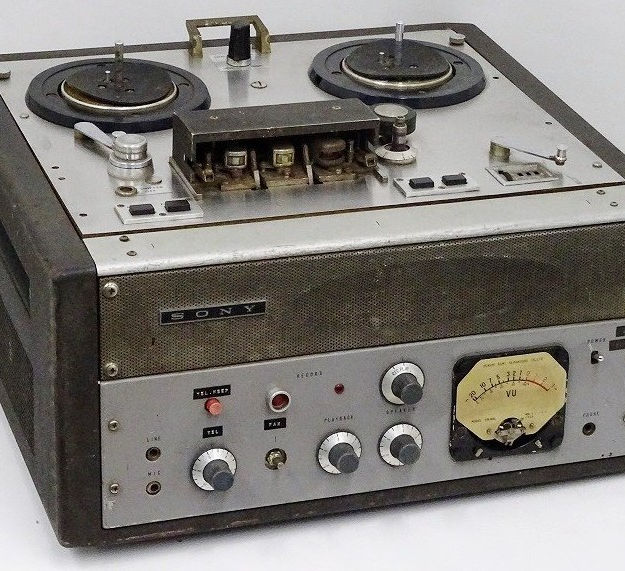
Tape Deck Details
Number of Motors
1
Number of Heads
3
Head Configuration
Mono-half track
Wow & Flutter
Signal-to-Noise [dB]
Dimensions [mm]
Weight [kg]
Year built
Head Composition
Permalloy
Equalization
NAB
Frequency Response
Speed
7½
Max Reel [inch]
Tracks
1/2 Rec/PB
Price
User
Consumer
Additional Information
The FT-3 is a vintage, tube-based (valve-driven) tape recorder from the early to mid-1960s, designed for basic, high-speed monophonic recording.
It is likely one of Sony's initial forays into the consumer market for higher quality, non-portable decks, bridging the gap between their very early models and the later transistorized (solid-state) equipment.
Key Technical Features (Vintage, Tube-Based)
Era: Early to mid-1960s (estimated).
Electronics: Tube (Valve) Electronics. This is a major distinguishing feature, as most high-fidelity consumer decks from the late '60s onwards were solid-state. Tube electronics contribute to a characteristic "warm" sound but require warm-up time and generate more heat.
Track System: Monophonic (Mono) - Half-Track. This system uses approximately half the width of the tape for a single audio channel, maximizing the recording quality for a monophonic signal.
Head Configuration: 3 Heads total:
1 x Erase Head
1 x Record Head
1 x Playback Head
Note: Using 3 separate heads (a feature usually reserved for high-end decks) indicates a focus on monitoring and quality, allowing the user to listen to the recorded signal immediately after it passes the record head.
What FT-3 Does (or Did) Well — Especially in Its Era / Use Context
As one of the early reel-to-reel recorders, FT-3 offered full-track mono recording / playback — potentially giving fuller use of tape width for mono content than quarter-track or half-track–stereo formats of some later decks.
The 3-head design means erase/record/playback heads — suggesting the possibility of recording and monitoring/editing (depending on how the electronics were wired).
Its compact reel size (7″) and simpler mechanics may have made it more affordable and compact compared to studio-grade large-reel machines — appealing for home use, personal recordings, or early tape-enthusiasts.
As a tube-based machine, some enthusiasts might value the vintage sound character (harmonic coloration, warmth) — though this comes at the price of lower fidelity and higher maintenance demand.
For historical or collectible value: FT-3 is representative of early tape technology from Sony — valuable for a collector or vintage-audio historian interested in early open-reel designs.
⚠️ Limitations, Known Issues & What to Watch Out For (Especially Today / On Used Units)
Mono only — no stereo — severely limits realism, spatial separation, and dynamic layering compared to stereo decks.
Lack of modern outputs / connectivity — with only a headphone output documented, integrating the deck into stereo amplifiers / speaker systems or digitizing analog tapes will be more challenging.
Limited reel size (7") and fixed speed (7.5 ips) — not suitable for long continuous recordings or for tapes requiring long runtime or multi-speed flexibility.
Tube electronics and vintage components — likely decades-old parts (tubes, caps, wiring) may be worn. Operating such a machine today often requires thorough maintenance, possible recap/rebuild, bias/alignment check, re-lubrication of tape path, head cleaning/demagnetizing.
Modest fidelity & noise/dynamic limitations — the “5/10” sound-quality rating suggests hiss, limited frequency response, and lower SNR compared to later decks; music reproduction may sound thin or noisy.
Rarity of documentation/parts — given its age, it may be difficult to find service manuals, replacement tubes/parts, or even suitable tapes, which complicates restoration or reliable use.
One-sided (mono) half-track format — tapes recorded on FT-3 may be incompatible or sub-optimal for modern stereo playback/archival workflows.
What FT-3 Makes Sense For (Even Today)
FT-3 might still be interesting/usable for:
Collectors / Vintage-audio enthusiasts — as a historical piece of Sony’s early tape-recorder lineup, valuable for heritage, educational interest, or museum-style collection.
Spoken-word, interviews, voice recording / archival — for mono voice tapes, lectures or field recordings where fidelity demands are limited and stereo isn’t needed.
Listening/digitizing old tapes recorded on similar half-track mono format, provided you accept modest fidelity and possibly noisy output.
Hobbyist restoration projects — for someone interested in vintage electronics, tube-era audio gear, and willing to invest time in maintenance (cap tubes, clean heads, possibly build a simple external preamp/line-out).