
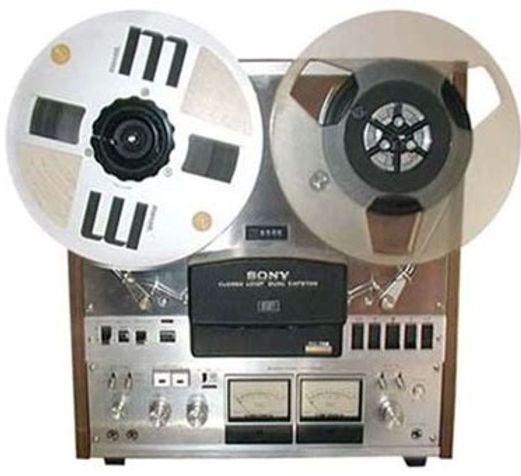
Sony TC-758
Sony
Japan
Tape Deck Details
Number of Motors
3
Number of Heads
3
Head Configuration
Stereo
Wow & Flutter
0.05%
Signal-to-Noise [dB]
53
Dimensions [mm]
435 x 452 x 222
Weight [kg]
24
Year built
1974 - 1977
Head Composition
Permalloy/Ferrite
Equalization
NAB
Frequency Response
30Hz - 20khz
Speed
3¾, 7½
Max Reel [inch]
10.5
Tracks
1/4 Rec/PB
Price
User
Consumer
Additional Information
The Sony TC-758 is a high-end stereo reel-to-reel deck from the mid-1970s (circa 1974–1977). It is closely related to the TC-755/756 series but distinguished itself primarily by including Auto-Reverse functionality—a feature typically found only on Sony's flagship convenience decks of that era.
The TC-758 combines the superior performance of a three-motor, three-head transport with the consumer convenience of automatic two-way playback.
System Architecture: Auto-Reverse Component Deck
The TC-758 was a premium "deck-only" component, designed to be integrated into an external hi-fi system.
Electronics: Fully Solid-State. Utilized high-quality, low-noise transistorized circuitry for high-fidelity audio reproduction.
Design: Heavy, robust component chassis built for stability, featuring a clear dust cover.
Track System: 4-track, 2-channel stereo/mono on 1/4-inch tape, NAB/IEC equalization.
Tape Speeds: 3¾ ips (9.5 cm/s) and 7½ ips (19 cm/s).
Reel Size: Up to 10.5-inch (26 cm) reels; 3 motors (1x AC servo dual capstan, 2x 8-pole DC servo for reels), full logic controls, pitch control, memory rewind, auto-stop.
Heads: Ferrite & ferrite construction in rotating assembly for forward/reverse operation.
Frequency Response: 40-18kHz at 7½ ips (good for era consumer decks).
Wow & Flutter: Low figures typical of dual-capstan design (specifics around 0.05-0.08% WRMS).
S/N Ratio: 56dB; THD ≤1.2%.
Features: Mic/line mixing, three-position EQ/bias for tape types.
Inputs: Line 60mV (100kΩ), mic (low sensitivity), DIN.
Outputs: Line, DIN, headphones.
Dimensions/Weight: Approx. 435 x 220 x 450 mm, ~24kg; power ~60W, multi-voltage AC.
✅ Strengths & Typical Use Cases
Auto-reverse / bi-directional functionality — convenient for long playback or recording sessions without needing to manually flip tape. Useful for continuous recordings, archiving, or long music sets.
Stable, quality transport — the dual-capstan, servo-controlled drive reduces wow & flutter and ensures reliable tape motion and consistent tape-to-head contact, which is important for stable playback/recording.
Flexibility with tape types — bias and EQ switching allows using normal, low-noise, or higher-grade tapes (e.g. FeCr / SLH) to optimize sound quality.
Large reel capacity (10.5") — supports long duration tapes, helpful for concerts, rehearsals, live recordings, or long playback runs.
Solid stereo performance — with good tape and proper calibration, the TC-758 delivers respectable frequency response, reasonable noise floor, and stereo separation, making it suitable for home-hi-fi listening, archival playback, or cassette-to-digital transfers.
For its era, this deck was considered a high-end consumer or semi-pro machine — delivering much of the convenience of an auto-reverse recorder plus respectable audio quality.
⚠️ Limitations & What to Check (Especially Today as Vintage Gear)
Audio fidelity is modest by modern standards — while good for a 1970s deck, S/N ratio (mid-50s to low-60s dB) and wow/flutter specs are nowhere near modern digital playback/recording.
Dependence on tape condition — to get the best performance, you need well-preserved, good quality tape (ideally low-noise or FeCr/SLH). Worn or degraded tape will reduce performance noticeably.
Mechanical complexity & vintage maintenance — auto-reverse mechanism, rotating heads, belts, dual capstan system, etc., all need good mechanical condition and periodic maintenance (cleaning heads, replacing belts/pinch rollers, lubricating the transport, checking switches). Over decades many units develop issues requiring servicing. Indeed, many refurb tests mention replacing belts, rollers, greasing rotating head assemblies, etc.
Heavy and bulky — at ~24 kg and sizeable dimensions, not ideal if you plan to move it or have limited space.
Quarter-track format (4-track stereo/mono) — good for stereo playback/recording, but not for multitrack recording/mixing as with professional multitrack tape machines.
🎯 What the TC-758 Is Good For — Use Today
If you own or are considering a Sony TC-758 (or find one on the market), it remains a solid vintage stereo reel-to-reel deck for:
Playing back old reel tapes (archives, recordings from the ’70s–’80s) — especially if you value analog “character.”
Capturing or archiving analog audio (live sessions, rehearsals, field recordings) with a warm, vintage sound.
Transferring analog tapes to digital — if you want to preserve legacy recordings with reasonable fidelity.
Serving as a component in a vintage hi-fi or audiophile system — for lovers of mechanical audio gear, nostalgic operation, or analog aesthetics.
Learning/practice platform for analog tape maintenance, restoration, and vintage audio mechanics (for enthusiasts who enjoy tinkering and restoring old machines).