
The Unsung Legacy of BSR: A Deep Dive into Turntable History

Updated: May 13
In the inaugural part of this series, we uncovered how the early decades of hi-fi were shaped not only by visionary innovators but also by manufacturers whose names have faded from the collective memory of today’s audiophiles. In this second installment, we turn our attention to a company whose influence on the global turntable market was so vast that at its peak it produced more record changers than any other manufacturer in the world. Yet mention its name today—even in audiophile circles—and you may receive only a puzzled look.
That company is Birmingham Sound Reproducers, better known simply as BSR.

A Colossus Born in the Midlands
BSR was founded in 1932 in Birmingham, England, by Dr. Daniel McLean McDonald. Like many British engineering firms of the era, it began modestly, producing transformers and public-address equipment. Nothing at the time suggested it would grow into one of the most prolific turntable manufacturers in history.
By 1949, the company was supplying turntable mechanisms to Decca and soon began selling decks under its own name, prompting rapid factory expansion.
By the early 1950s, with home music systems booming and the long-playing record well established, BSR shifted its engineering and manufacturing might into the production of record changers and automatic turntables. With a combination of solid mechanical engineering, efficient manufacturing, and aggressive OEM supply, BSR rapidly became the backbone of the global consumer record player industry.
Monarchs, Dansettes, and the Age of the Record Changer
To understand BSR’s rise, one must appreciate the culture of record listening in the mid-20th century. Most consumers did not handle their LPs the way audiophiles do today. Convenience reigned supreme, and the ability to stack records for uninterrupted listening was more important than the last word in tracking finesse.
BSR excelled in this context. Their changers were:
Ruggedly engineered, using idler wheels, mechanical trip systems, and multi-speed support.
Easy to service, ensuring longevity in family homes, dance halls, schoolrooms, and portable players.
Incredibly scalable, enabling weekly production runs in the hundreds of thousands.
If you owned a British record player in the 1950s or 60s, there is a good chance the turntable came from BSR, even if the badge on the lid said something else. The firm’s Monarch automatic record changers could juggle intermixed 7‑, 10‑, and 12‑inch discs and all four common speeds – 16, 33⅓, 45, and 78rpm – using a mechanical “finger” to sense diameter as each disc dropped, a clever solution in a purely clockwork world.
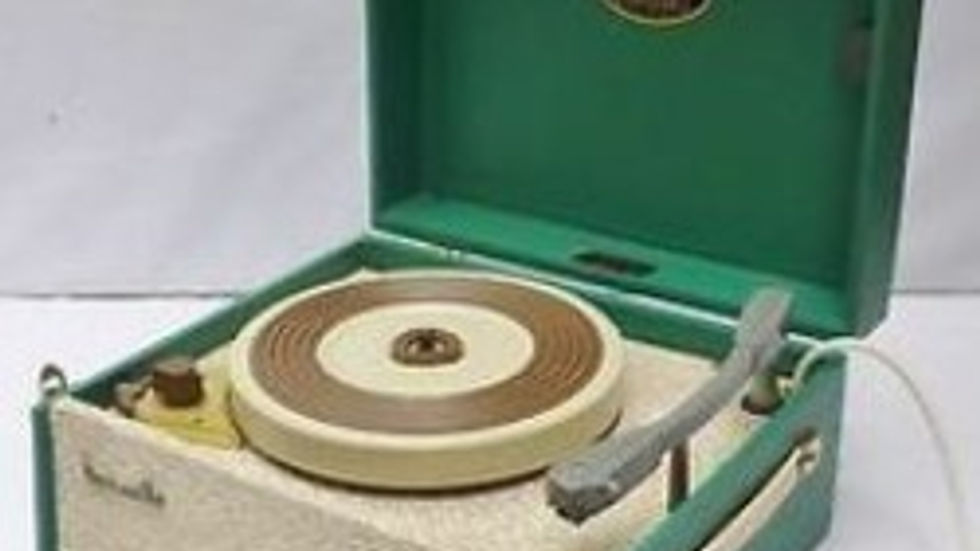
Portables such as the iconic Dansette relied heavily on BSR autochangers. Over the next two decades, Dansette alone built more than a million players around BSR mechanisms, cementing the brand’s position at the heart of British youth culture.
By 1961, BSR employed around 2,600 people and would eventually capture close to 87% of the global turntable and record‑changer OEM market, with major US, Japanese, and European brands quietly fitting its decks into their own systems.

The Peak: When BSR Ruled the World
By the mid-1970s, BSR had become a true industrial titan. At its height, the company operated multiple factories in the UK, employed thousands of workers, and produced staggering quantities of turntable mechanisms. Some estimates claim BSR once supplied nearly nine out of every ten record changers sold worldwide.
It was during this period that BSR made a surprising acquisition: the American firm Audio Dynamics Corporation (ADC), famed for its high-compliance phono cartridges. This pairing of a mass-market British engineering powerhouse with an innovative American cartridge specialist was unexpected, but it brought new technological ambitions to BSR’s portfolio.
One result was the unusual—and for its time, futuristic—ADC Accutrac 4000, a programmable, optically-sensing turntable with track-selection capability. Though far removed from BSR’s mainstream products, it revealed a company still interested in pushing boundaries even while dominating the mass market.
Built at BSR’s Cradley Heath factory with electronics help from Pico, the Accutrac 4000 allowed users to program the order of tracks on an LP side – an early taste of “random access” long before CD players and streaming queues.
A sophisticated optical sensor system read the record surface to locate individual tracks and then guided the arm accordingly, wrapping serious engineering around a still‑largely‑mechanical platform. For today’s audiophile, these ADC/BSR decks are fascinating artifacts: conceptually visionary yet anchored to the same company that was simultaneously mass‑producing millions of budget changers.
BSR’s Place in Audiophile History - A Legacy Worth Revisiting
From an audiophile perspective, BSR sits in an awkward spot: it rarely competed at the true high end, yet its engineering framed the everyday vinyl experience for an entire generation. The brand democratized access to recorded music, supplied mechanisms to countless badge-engineered players worldwide, and even flirted with genuine innovation in track-select turntables, all while operating at industrial volumes that few hi-fi marques could even imagine. Their machines may not have been audiophile marvels, but they were durable, functional, and—most importantly—everywhere. They introduced entire generations to music reproduction, forming the foundation upon which many later hi-fi passions were built.
In a series on “forgotten names in turntable manufacturing,” BSR thus deserves recognition not for chasing the Linns and Micro‑Seikis of this world, but for building the mechanical backbone of mid‑century music listening. This serves as a reminder that the story of vinyl is as much about everyday record changers in ordinary homes as it is about cult belt‑drives on audiophile racks. Without BSR, many millions of people might never have owned a turntable at all.
The Enduring Influence of BSR
BSR's impact on the audio landscape cannot be overstated. Their innovations and widespread adoption of record changers helped to shape the listening habits of an entire generation. The ease of use and accessibility of their products made music more available to the masses. This democratization of sound is a significant chapter in the history of audio technology.
As we continue our series on forgotten names in turntable manufacturing, BSR stands as a reminder that the story of vinyl isn’t only about precision engineering and boutique craftsmanship. It is also about scale, accessibility, and the companies that made music playback a universal experience.
In the next article, we’ll turn our attention to another overlooked pioneer—but for now, pause for a moment the next time you see an old record player at a flea market. Turn it around. Look inside. If you find the unmistakable mechanisms of Birmingham Sound Reproducers, remember: you are looking at the remains of one of the greatest unsung giants of the audio world.


Comments