
Trailblazers of HiFi Turntable Design Who Shaped the Industry

Updated: May 13
In the golden age of vinyl, and again now, in its modern renaissance, the turntable has never been merely a device for spinning records.
The history of the hi-fi turntable is often told as a parade of brand names and model numbers. Yet behind every iconic deck stands a designer who challenged accepted wisdom about vibration, speed stability, mass, and energy dissipation. Behind these iconic devices are visionary designers who pushed the boundaries of engineering and aesthetics to create turntables that not only perform exceptionally but also inspire passion among audiophiles. This post explores the most influential figures in HiFi turntable manufacturing, highlighting their contributions and how they shaped the industry.

The Early Innovators Who Set the Standard
The foundation of modern turntable design was laid by pioneers who focused on precision mechanics and sound fidelity. Their work established principles that remain central to turntable manufacturing today.
Edgar Villchur — The Suspension Revolutionary
Key work: Acoustic Research XA
Era: Early 1960s
Edgar Villchur, founder of Acoustic Research, did not set out to build a luxury product. He aimed to solve a problem: how to isolate a stylus from environmental vibration cheaply and effectively.

His solution—the three-point suspended subchassis—was radical in its simplicity. Villchur’s key insight was that the platter and tonearm should not be rigidly tied to the outer plinth and motor. Instead, he mounted them on a low-mass sub-platform hung on carefully tuned springs, with the motor isolated from this moving assembly. This three-point, low-resonance suspension dramatically reduced the effect of footfalls and acoustic feedback compared with the heavy, rigid decks of the day.
He separated the system into two worlds. Above: a low-mass platform carrying platter and tonearm, tuned on springs to a resonance so low that walking across the room or the speakers’ own bass could not be picked up. Below: the noisy stuff—motor, plinth, structure—that the springs deliberately decoupled. The point wasn’t comfort; it was to push the mechanical resonance below the audio band, so the stylus saw only the microscopic chaos of the groove, not the macro-chaos of the room.
His AR turntable is often described in polite terms—“important,” “influential.” That’s too mild. Villchur’s suspended-subchassis was a controlled act of violence against the main enemy of vinyl playback: energy you didn’t ask for.
The idea seems obvious in hindsight, but it created an entirely new branch of turntable topology. Thorens’ TD150 and later Linn’s LP12 directly borrowed and evolved Villchur’s geometry, and for many audiophiles, the “belt-drive, sprung-subchassis” deck still defines what a serious record player looks and feels like. Almost every suspended turntable that followed traces its lineage directly to him.
Villchur’s AR XA turntable sounded better than many far more expensive decks, and its influence cannot be overstated. Villchur proved that engineering insight mattered more than mass or ornamentation.
Ivor Tiefenbrun — The Source Evangelist
Key work: Linn Sondek LP12
Era: 1970s–present
If Villchur invented the architecture, Ivor Tiefenbrun turned it into a belief system. Tiefenbrun’s genius was not purely mechanical—though the LP12 was meticulously refined—but philosophical. He argued, controversially, that the source component mattered more than amplifiers or speakers. If information was lost at the turntable, it could never be recovered downstream.

The LP12 became a living product, continuously upgraded rather than replaced. Tiefenbrun treated the turntable as a system, where bearing tolerances, subchassis stiffness, and power supply stability were inseparable.
Love him or loathe him, Tiefenbrun permanently changed how audiophiles evaluate sound—and how manufacturers think about product evolution.

Helmut Brinkmann — Precision as Art
Key work: Brinkmann Balance, Oasis
Era: 1980s–present
German engineer Helmut Brinkmann approached turntable design with almost surgical discipline. For him, rotational accuracy, bearing perfection, and motor control were paramount.

Brinkmann championed direct coupling, high-precision bearings, and external power supplies long before they became fashionable again. His decks rejected decorative excess in favor of understated elegance and obsessive tolerances.
Unlike many designers, Brinkmann was deeply involved in motor development, working extensively with DC motors and servo control to minimize micro-fluctuations in speed.
His work bridged the gap between traditional belt-drive romanticism and modern engineering rigor, proving that precision and musicality are not opposites.

Mark Kelly & the British Flat-Earth Engineers
Key work: Roksan Xerxes
Era: 1980s
While not as publicly visible as Tiefenbrun, Mark Kelly and the early Roksan team challenged one of the sacred cows of suspended design: the spring itself.
The Xerxes replaced soft suspension with a rigid, split plinth that drained energy rather than isolating it. This was heresy in the UK at the time.
Kelly’s insight was that stored energy—whether in springs or mass—can blur timing. The Xerxes emphasized immediacy, rhythm, and attack, influencing later high-rigidity designs from Rega and others.
This marked a philosophical split that still defines turntable design today: isolation versus energy evacuation.

Roy Gandy — The Anti-Audiophile
Key work: Rega Planar series
Era: 1970s–present
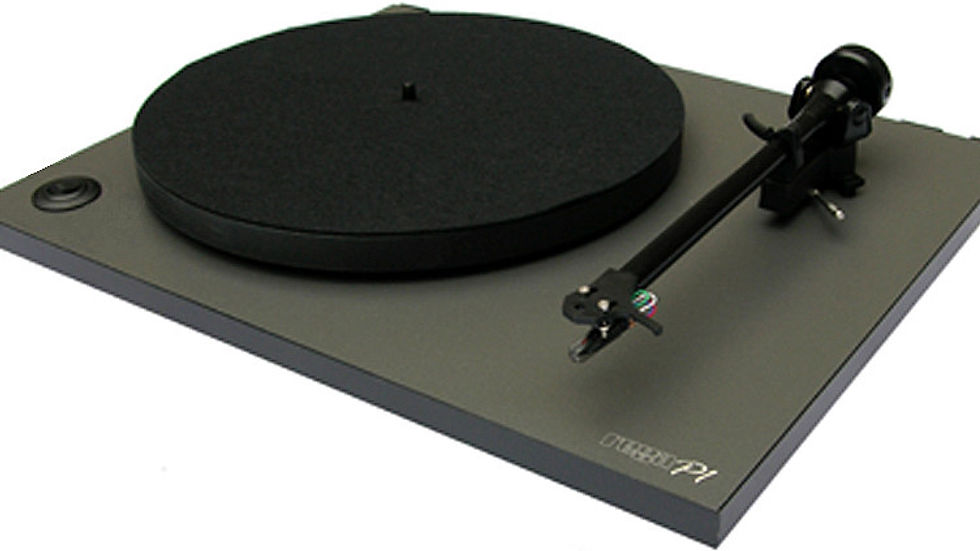
Roy Gandy may be the most misunderstood figure in turntable history. Rejecting mass, suspension, and complexity, Gandy argued that lightweight, rigid structures preserve timing better than heavy ones. His Planar turntables stripped away everything non-essential.
Gandy also rejected audiophile mysticism. He distrusted tweak culture, cable mythology, and over-engineering. Instead, he pursued consistent, repeatable engineering at attainable prices.
That Rega turntables remain benchmarks decades later is testament to the clarity of his vision: a turntable should disappear and let the music speak.
Harry Weisfeld — The Unlikely American Iconoclast
Key work: VPI HW-19, Classic, Prime
Era: 1980s–2010s
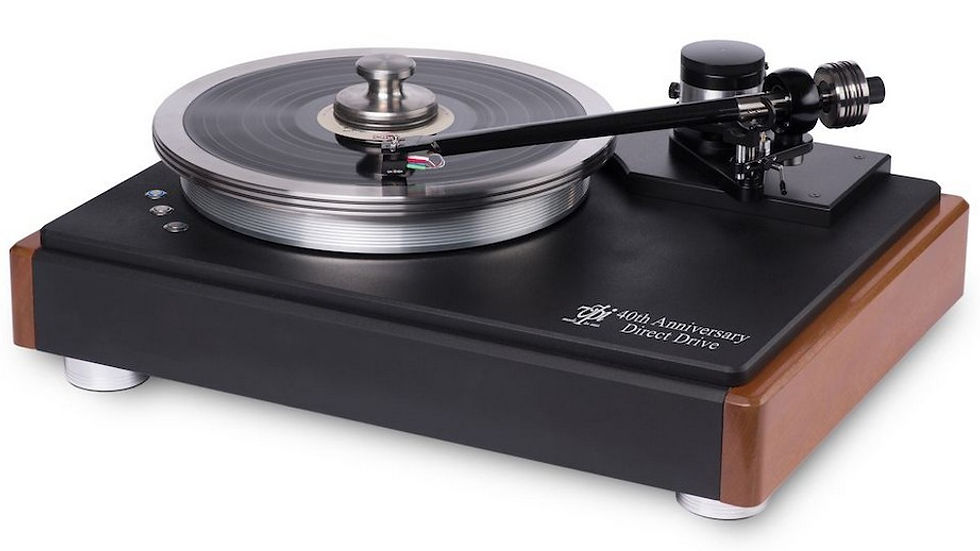
Harry Weisfeld came from the world of industrial testing equipment, not audio salons. His designs reflected that background: rugged, modular, unapologetically mechanical. Weisfeld embraced mass-loading, massive platters, and user-adjustable components. His turntables invited experimentation rather than discouraging it.
VPI decks helped legitimize American high-end turntable manufacturing at a time when Europe and Japan dominated the narrative. Weisfeld proved that analog could be both engineered and hands-on.
Thomas Schick, Simon Yorke, and the Modern Craftsmen
In the modern era, designers like Thomas Schick, Simon Yorke, and others have revisited early principles—idler drives, massive platters, hand-finished bearings—with fresh eyes. These designers emphasize mechanical honesty, often building fewer units but with extraordinary attention to detail. Their work reflects a mature understanding: there is no perfect solution, only coherent ones.

The Anonymous Idler Engineers – Torque as a Musical Value
Hi-Fi likes heroes with names. Broadcast engineering is more anonymous: design teams, standards committees, drawings labelled only with initials. The idler-drive legends—Garrard 301/401, EMT, Rek-O-Kut—came out of that culture. They weren’t born to impress audiophiles; they were built to survive technicians, cigarettes, and 16-hour broadcast shifts.

Those engineers optimized for torque density and recovery. A big induction motor drove a rubber idler which drove the platter’s rim. At first glance, this is barbaric: multiple contact points, potential rumble sources everywhere. But executed with proper machining and mass loading, it yielded start-up times under a second and speed regulation that didn’t flinch when you brushed a carbon brush or dropped a heavy record clamp.

The result is a sonic character we’re still trying—and often failing—to fake with software and DSP. That sense of temporal authority, of rhythm being nailed to the floor, is not magic; it’s the audible by-product of large motors, high mechanical impedance, and control loops so primitive they couldn’t help but be fast. The modern idler revival, with its £10,000 plinths wrapped around 1950s motors, is really a belated love letter to a group of engineers who never thought of themselves as making “hi-fi” at all.
The Stylists as System Thinkers – B&O and Transcriptors
Turntable history is not only about noise spectra and bearing tolerances. Designers at Bang & Olufsen in the early 1970s treated the record player as an industrial-design object that had to live comfortably in modern homes. After rebadging Thorens decks, they created the Beogram 4000 series—sleek, low-profile linear-tracking machines that integrated electronics, ergonomics, and aesthetics into a coherent whole.
Linear-tracking Beograms with tangential arms and touch-sensitive controls weren’t merely pretty objects; they were attempts to integrate mechanical, electronic, and human factors into a single, coherent system. The platter height, the arm travel, the automation logic—all were engineered so non-enthusiasts could play records without fear, while enthusiasts could take guilty pleasure in how futuristic it all felt.

Their designers reconsidered the entire user journey: automatic cueing, touch-sensitive controls, and a layout that made sense from across the room.
Around the same period, David Gammon’s Transcriptors turntables pushed the visual envelope even further—elevated discs, polished metal, and a sculptural presence that Stanley Kubrick immortalised on screen.
Transcriptors, in its own way, weaponized aesthetics: the metal discs, skeletal platters, and exposed mechanics are not neutral choices. They provoke. They say: this is not furniture; this is a kinetic sculpture that also happens to be a precision instrument. In a hobby that often hides its engineering under wood veneer, that kind of honesty is oddly radical.
These designers insisted that form and function were not enemies; they anticipated today’s expectation that a reference-grade deck should also be a piece of domestic art. In so doing, they widened the audience willing to live with serious vinyl systems.
The Technics Teams – Direct Drive Without the Sins
If idler drive was torque by brute force, direct drive was torque by elegance—and also, in early forms, by compromise. Classic SL-1200s and SP-10s were brilliant but not innocent: cogging, servo hunting, and motor noise were tamed, not eliminated. Ken Ishiwata played a key role in refining the Technics SL-1200, a turntable that became a cultural icon. What’s interesting now is how modern Technics engineers went back to first principles and essentially admitted: we can do better with the tools we have today.
The contemporary coreless motors are not nostalgia pieces. Remove the iron from the stator, and you remove the dominant source of torque ripple. Surround the rotor with many more poles and higher-resolution feedback, and you flatten what used to be a staircase into something approaching a straight line. Drive that with control algorithms that think in microseconds rather than mains cycles, and “direct drive” stops being a euphemism for convenient and becomes a brute-force speed reference that’s quieter than most belts.
There’s something almost perverse here. For years audiophiles dismissed direct drive as “for DJs,” a necessary evil for scratching and cueing. The new Technics tables carry a subtextual challenge: what if the most musically convincing belt-drive decks of the past were partly compensating for flaws we no longer need to tolerate? What if the correct solution to speed stability really is a motor big enough to terrify a platter, but civilized enough not to tell you it’s there?
Designers Who Blended Art and Function
Beyond mechanics, some designers approached turntables as works of art, creating pieces that were as visually striking as they were sonically impressive.
Mark Levinson
Mark Levinson’s designs emphasized minimalist aesthetics paired with high-end components. His turntables often featured sleek lines and premium materials like aluminum and acrylic. Levinson’s philosophy was that a turntable should be both a technical instrument and a centerpiece in a listening room.
Andrew Jones
Andrew Jones brought a fresh perspective by focusing on affordability without sacrificing sound quality. His designs for various brands introduced innovative tonearm geometries and lightweight platters, making high-fidelity turntables accessible to a broader audience.
Modern Innovators Shaping Today’s Turntables
The latest generation of designers continues to push the envelope, integrating digital technology and new materials to meet the demands of contemporary listeners.
Niels van der Veen
Niels van der Veen is known for his work with VPI Industries, where he developed turntables that combine traditional craftsmanship with modern engineering. His designs often feature precision-machined parts and advanced suspension systems to reduce resonance.
Paul Rigby
Paul Rigby’s contributions to Rega turntables have focused on simplicity and performance. His designs use lightweight plinths and carefully engineered tonearms to deliver clear, dynamic sound. Rigby’s work demonstrates that innovation can come from refining existing concepts rather than reinventing them.
Why This History Still Matters
It’s tempting to see turntable design as a solved problem in an era of hi-res streaming and DSP room correction. But every time you choose between a suspended subchassis and a slab deck, between belt and direct drive, between mass and minimalism, you’re taking sides in arguments these designers started decades ago.
Villchur and Tiefenbrun still frame the debate about isolation and the primacy of the source. The anonymous idler engineers and the modern Technics teams define what we mean by “speed stability” and “drive.” Gandy and the system stylists remind us that simplicity and usability are not aesthetic afterthoughts but engineering constraints.
The provocative question, especially for an audiophile audience, is this: are we listening to the record, or are we listening to our chosen designer’s worldview? In practice, it’s always both—and that’s exactly what makes turntables, and the people who obsess over them, endlessly worth arguing about.


Not mentioning Marcel & Jaques Riendeau the creators of the Oracle turntable is blasphemous. It was the 1st high-end table to combine beauty and high level engineering in one package, Perhaps more important, it is still being manufactured and supported to this day.